
The Comedic Rise of Nashville
Season 4 Episode 7 | 26m 46sVideo has Closed Captions
Jerome Moore explores Nashville’s rising comedy scene with local creators and comedians.
Join Nashville PBS host Jerome Moore as he explores Nashville’s rising comedy scene with Matt Anderson of Bless This Mess, CJ Walton from 911 Nashville, and Cortney Warner, comedy night host at The Blue Room. Together, they discuss the community, talent, and momentum fueling Nashville’s rise as a growing comedy destination.
Problems playing video? | Closed Captioning Feedback
Problems playing video? | Closed Captioning Feedback
A Slice of the Community is a local public television program presented by WNPT
Support provided by:


The Comedic Rise of Nashville
Season 4 Episode 7 | 26m 46sVideo has Closed Captions
Join Nashville PBS host Jerome Moore as he explores Nashville’s rising comedy scene with Matt Anderson of Bless This Mess, CJ Walton from 911 Nashville, and Cortney Warner, comedy night host at The Blue Room. Together, they discuss the community, talent, and momentum fueling Nashville’s rise as a growing comedy destination.
Problems playing video? | Closed Captioning Feedback
Where to Watch A Slice of the Community
A Slice of the Community is available to stream on pbs.org and the PBS app.
Providing Support for PBS.org
Learn Moreabout PBS online sponsorship- No, no, no, you not gonna do that to me on television.
(group laughing) "A Slice of the Community" is made possible by the support of the Community Foundation of Middle Tennessee.
(audience cheering and clapping) Hello and welcome to another episode of "A Slice of the Community".
I'm your host, Jerome Moore, and today we are live in studio, joined by Matt Anderson, CJ Walton, and Cortney Warner.
How y'all doing?
- Great.
- Hey, what's going on?
Yeah.
- Y'all excited to be here?
- Absolutely.
- Oh yeah.
- We're doing a Nashville PBS first.
We're gonna have some comedy in the building.
- Yes.
- Ready to laugh.
- Hope we don't make it the last.
- I know, right?
(group laughing) - We got this.
- We got this.
- And y'all remember y'all doing the comedy, look, we don't need any more funding cuts, all right?
Just keep- - Oh.
- Keep that in mind.
You know, you telling you jokes, you know?
(group laughing) But thank you all for being here.
- Absolutely, yeah.
- I appreciate y'all, and I'm excited to just talk about comedy and what that means for Nashville, greater Nashville, and just a growing city, right?
And you all do a little bit something different which is unique in the comedy space, writers, actors from a political side as well, social change side.
And so I wanna dive into all of that, right?
And so, like, I wanna start with you, Matt, if you can just go in a little bit and say like, kind of what comedy means to you personally.
And I want each one of you all to answer that question, and we'll dive even deeper.
Like what does comedy mean to you?
- Wow, okay.
Hey, I'll dive deep here.
I mean, I grew up with my dad.
He VHS taped, no listen, he doesn't have autism or anything, but he would highlight the television schedule of every talk show, "SNL", all the funny stuff he could tape, right?
- Yeah.
- And that was a happy time in the family watching all that stuff.
So I cut my teeth on "SNL", David Letterman and just absorbed all that comedy.
And it's a refuge and a place of joy, right?
And especially like, it's been a pretty heavy week nationally and- - Yeah.
- Especially in Nashville too.
A 4-year-old abducted by ICE.
And so, you know, that's heavy.
- Yeah.
- Yeah, yeah, yeah.
- Yeah.
- I can really bring the vibe down.
(group laughing) But truly- - And we're gonna go on you, Cortney.
- Yeah, yeah, yeah.
Let set you guys up here.
But, you know, with world events this heavy, like, we need to laugh.
We need to laugh.
It gets us through the day so.
- Yeah.
- How about you?
What does comedy mean to you right now?
- Oh, it means everything to me.
You know, like I moved to Nashville 11 years ago.
I wanted to be a studio musician.
I wanted play guitar for people.
I studied that in school.
Did that for like, all throughout my teenage years.
And then I moved here and I was like, oh, I don't actually like this.
I don't like this in a professional capacity.
And then I took some time off and then decided to try comedy.
And it changed my life.
It you know, I think I'm so lucky that people search their whole lives to find a thing that I found for me at the age of like 23.
You know what I mean?
And I know I'll do it the rest of my life.
It gave me a community, a lot of friends, self-confidence, also just helped me process, (gentle music) hello.
(laughs) - Yeah, little in live studio music.
- I was gonna say, I like have my own walk-on music sitting down.
But yeah, it changed my life a lot of ways.
- How about you, CJ?
- I got into comedy by accident so.
- I remember this.
- Slipped into it.
- I honestly slipped into comedy.
I'm an actress by trade, by day.
That is my complete profession.
And I'm a teacher as well.
So I got into comedy from my friends and then they kept pushing me and pushing me.
So what it means to me is true community.
- [Jerome] Yeah.
- I found a real sense of friendship and brotherhood and sisterhood and comedy.
That even though the acting community, it's there for some reason, I think with comedy, because you are so singularly by yourself on the stage, and you have to do it by yourself, and then you have to get off and then, hey, how did I, and come up and ask them in this and that.
So it's a comradery of like writing and talking and writing and talking.
And for me, comedy is a tool for education.
- Yeah.
- Yeah.
- It's a definite tool for education for me.
I use it in class and I use it with my acting.
So it's definitely a true slice of the community.
- Oh, I like that.
Yeah, I like what you did.
- Yeah, yeah, yeah.
- Cool points for you.
- There we go.
Thank you.
And pizza.
- And pizza.
Yeah, for sure.
Save her some pizza.
I'm gonna ask all of y'all this question, but I'm gonna start with you, Cortney.
Nashville is a growing city.
A lot of different opportunities, right?
- Yeah.
- Also challenges.
What does that balance look like in comedy right now, in that scene of opportunities versus challenges in a growing city like Nashville?
- I think it's just like, there's a lot of things in terms of the comedy scene that a lot of things aren't unprecedented.
Like, you know, like you think about like a city like New York or LA or even Chicago, like, that's been like comedy's established there.
You move there to be a comedian, usually in some capacity in Nashville, that's not always been the case, but like in the past, like, you know, nine, 10 years of me doing comedy, it's gone from like, oh yeah, you move here and then you move to a bigger city.
But now you can live here in Nashville and you can become, you can become famous living here, which is kind of crazy.
So I think finding a balance of just like, I think just like figuring out like how to navigate it, I think is in like how to like, just like making sure that you present yourself, your best self because you just don't know what's gonna, what might happen, you know, might be around and that wasn't always the case in the past.
I think everyone tried to be their best selves regardless.
But like there's like this extra like, oh, anything could happen.
Which I think is cool.
But it's a balance to, yeah, to stay true to yourself, but also make sure that, just to look, just to be open for any opportunity.
- Right.
And Matt, I have this question specifically for you being that your comedic style is a little different, right?
Than just stand up on the stage, right?
You know, a lot of mess, a lot of blessed the mess.
- Challenging.
- You know what I'm saying?
A lot of bless the mess in your comedic approach.
But this is really, this is really tailored.
So you kind of spoke on it earlier, just in your intro, how do you remain funny taking on serious maybe political things or pundits or whatnot in the comedic space while you may be delivering something or talking about something that's very serious, but, you know, people need to laugh.
Like people need to be able to digest it in a way that they get the humor out of it but they are still informed.
- Yeah, yeah.
So I've been doing this Bless this Mess page for a year now, and it presupposes what if the news was R rated, right?
So I've been doing some, trying to do some funny takes and pull no punches.
And, you know, the administration is R rated, right?
Our state lawmakers are R rated, right?
So why shouldn't we go ahead and talk about the news in that way?
- [Cortney] Yeah.
- And so yeah, that's been a big part of the Bless This Mess Project and, you know, been trying to promote local comedy shows in town.
There's an amazing scene here.
- Yeah.
- That I think is starting to get some notice.
- I think so.
- Yeah, for sure.
- I agree with you.
- Yeah.
- What does that notice look like?
Like for us that are not comedians, what does that before and now look like as far as notability and comedians being able to be seen here in Nashville now?
- I think it goes back to what Cortney said, when it comes to like, cities.
You have Los Angeles, New York, Austin, Chicago, Atlanta.
- [Cortney] Yeah, Atlanta was a big one.
- Atlanta was a big one.
I think right now we are actually surpassed Atlanta when it comes to the comedy scene.
And what it means by the comedy scene is getting the work, being seen, being on stage.
You have Bless the Mess here.
You have Don't Tell, you have Zanies, you have Third Coast, you have the Nashville Comedy Festival.
- Yeah.
- Which is hosted here.
You have, oh, I don't have to say his name.
Any hoo, you have that festival, which is hosted here, that comedy festival, which is hosted here.
It's not the best.
- Yeah, no, I know.
- But we know whose comedy festival we're talking about.
And then you have all sorts of comedians that because of who Zanies is and where they are in the community from Zanies, they have one here, one Chicago, Second City, Chicago, New York, The Cellar.
- LA.
- LA The Comedy Store.
So they all, it's like a circle of comedians.
- Yeah.
- Yeah.
- That coexist.
And it's a smaller community than you think.
- Yeah.
- Even though it's a lot of comedians out there, it's smaller than you think.
- Yeah, I think when it comes to like people who are working actively, it's a lot smaller than maybe what you would perceive from like looking at a, like, you know, like a like, yeah, just seeing like who's coming to what.
- Yeah.
And Nashville has a more, and Nashville has a reputation of a welcoming presence.
- Okay.
- I think so.
- Like Chicago that you have to be, you working, you already there.
Nashville, it's welcoming.
- Well, let's talk about that welcoming, because we have a white man, a Asian woman, and a black woman.
- What?
- Yeah.
Can you believe it?
Yeah, you didn't know?
You didn't know?
- What?
- Yeah, you're black.
- Welcome to the United Nations, guys.
Glad you all could make the meeting.
- [CJ] You're Asian.
- What?
- Girl.
- We could be a college brochure right now.
What are we doing?
- You two we're sisters.
- Yeah.
- Yeah, but I didn't know she was Asian.
I thought she was black.
- And they're biological sisters.
Yeah.
- Any hoo, okay.
- But I'll just imagine that the entry point or the acceptability though or the welcoming may vary or be different in you all's experiences.
- Yeah.
- Is that's something like, I would like to dive into that.
- Yeah.
- And what that looks like.
- I think for me, I started comedy about like, I'd say like about 10 years ago.
Let's just be generous with that.
And I was, at the time, the only Asian person, East or South Asian person going out to mics and doing stuff.
And the only woman- - Oh my God, you were.
- I still, I mean, kind of, I think you, well, Ritu moved and then John is still here, but like, yeah.
Even as far as like Asian people in general, like I definitely was very alienated.
And I don't know if you guys are aware, but people still really like to be racist turns out.
Crazy.
- Really?
- Believe you me.
- No idea.
Yeah.
- I know.
So people are, you know, especially like 10 years ago, starting in comedy here, being like the, usually one of the only women, definitely one of the only women of color, only Asian woman.
I dealt with a lot of just really awful things being said at my expense on stage.
And then having, people having to be like, oh, well, they're just joking.
And I'm like what they said is awful.
Like, you know what I mean?
And like for some reason, and specifically I feel with people making racist jokes about Asian people, that still seems to be almost somewhat accepted and okay to do.
Like we see some of those brilliant minds in comedy still doing an accent or making a joke about a nail salon or whatever.
And you know, and it was really hard to keep going at the beginning.
Like, thankfully I was just crazy enough and delusional enough and loved it enough to like, not let it deter me too much.
But there were nights that I would leave open mics crying because people would just be so awful, you know?
And just also like, yeah, just a lot of stereotypes and a lot of like, racial implications that were going on.
So, sorry, what was your question?
- Yeah, no, you got into it.
And I have so many more questions now, but I want Matt and CJ to speak to you all's experience, Matt, the privilege.
(group laughing) - All right, you're on now.
- Listen- - The privilege side, Matt.
- I have flown on a commercial flight without ID.
No.
(group laughing) No one get mad at me.
No one get mad at me.
No, I mean, as like the comedy scene here in Nashville grows, I mean, I don't know if we brought up Austin, right?
But there's a big comedy scene there that like, kind of leans right.
And like, that world got behind Donald Trump, right?
And it was like legalized comedy, right?
- Right.
- And it really just meant that they wanted to say the R word, right?
- Yeah.
- Which is not that funny to punch down.
- Right.
- You know, I mean, Bless this Mess it's all about punching up.
There's a lot to punch up at around here.
- Yeah.
- But, yeah, and one more thing I wanna say, I mean, to that kind of MAGA thing behind Trump, the comics that lined up like that, right?
I mean, I think these cultural voices like Cortney, like CJ, cultures upstream of politics.
So having people like you in Nashville, being the faces of Nashville among others, right, is really important, versus people who, you know, just don't believe in vaccines or whatever, right?
Or just like weirdo comics that are in Nashville that- - Okay.
- Yeah.
- You know?
- Well, we're like looking down like yeah, we know what you're talking about.
- Yeah, I mean, and we've got one that's about to come out with a movie that's like the entire joke is that I'm a bad father and I don't know who my kid's doctor is, right?
- Yeah.
- Like that kind of lazy guy that dates back to Homer Simpson.
Older than that, right?
- Okay.
- You know, I would rather see a different type of culture put forward in our scene, which- - Yeah.
- That would be pretty cool.
- I wanna give you an opportunity CJ too.
- Oh.
- Unless they said it all, you know?
- I really think they did.
I know, I mean, when I started doing comedy here, I was, at the time, I was the only black female consistently doing it.
- Yeah.
- But I know before me there were other black females.
I can't say that I was the first because I wasn't.
I know at that point in time in comedy, I was consistently going out and doing it.
So I was the only one that I was seeing and I was seeing her.
- We were like, that's how we bonded.
It's like, oh, we're at this bar, you know.
- We're at this bar.
So it was only an Asian girl or a black girl.
- And like 30 other straight white men.
- And then 30 other white people.
- Yeah.
- Which I'm from Chattanooga, that's normal.
- Yeah.
- So.
- Yeah.
- That's how I grew up.
That looked like my family reunion.
And so I guess when I looked at it culturally, I was like, okay, this is what it looks like because comedy, let's just be honest, it's a man's game.
- [Jerome] Okay.
- It is a male dominated field.
- Yeah.
- Okay.
- And it is a white male dominated field.
- Okay, Matt.
Yep.
- Yeah, Matt.
- Yeah, Matt.
- I'm trying to stay out of the way right now.
(group laughing) - I think she's just saying your name without saying your name.
That's all.
- But again, when you have good comics and you have good owners, and you have good bookers, shout out to Brian, owner of Zanies, shout out to him all day.
And Andrew Dorfman shout out to, because the comedy scene in Nashville, I can't ever say anything bad about the men here ever.
And I won't because I've been propped up.
Like they've been on my spine like hey CJ, keep going, keep going.
The men in the acting community.
So even though it is a male dominated field, I've been truly blessed to have beautiful and talented men behind me, black and white and Hispanic pushing me in my back saying, keep going, keep going, keep going.
So, I mean, I'm blessed to have that at least.
- And we know Nashville changing and gentrification is happening, people, like, a lot of great things are happening within that change too.
What role can comedians or do you see yourself playing in making sure when you're doing comedy, you are uplifting Nashville, right?
You're letting people know that Nashville is a great place and it's a place that you should move to and there's opportunity here.
You know, and it's also a place where people have pride and we wanna be respected like any other city as well.
- Yeah, I think there's a really positive side of Nashville to promote.
And I think Nashville is such a bellwether for the South that what gets projected and broadcast from Nashville.
- That's right, yeah.
- Bellwether, that's a great word.
- It just ripples out, right?
So the type of comedy that happens here matters.
- Yeah.
- Yeah.
- But yeah, I I think projecting that positive side of Nashville so that the, you know, I think the country tunes into what we do.
- Yeah.
- Yeah.
- I don don't think Tennessee is a real state.
- Yeah.
(audience laughs) - It's three.
- Yeah, yeah, right.
- It's three states.
- Yeah.
- And so I have to agree with him, like, in order to push Tennessee, you got to, you have to look for the positive.
- Right.
- So.
- Yeah.
- Well, what is missing?
What do you all think is missing in Nashville?
- [CJ] Barbecue?
Oh.
- No, in the comedy.
Don't go there.
- Oh, I thought you Yeah, we're missing that too.
- You know, like our barbecue is good.
Our barbecue is good.
Look I'm a national native.
I can't let you talk about the barbecue.
I'm not, I'm not letting y'all talk about the food.
I'm not gonna do it.
I'm not gonna let it slide.
- Yeah.
- I'm not gonna let it slide.
- It's not Memphis.
- You know what I'm saying?
We comparing Nashville to Memphis.
See, that's why gonna ahead and give us the grizzlies.
But anyway.
(audience laughing) - Don't do Memphis like that.
- It's good, we're good.
- They have it hard enough.
- That's the barbecue with it.
Like what are we doing?
Okay, any hoo, let's get back to these important questions.
- Yes, please, sorry.
- CJ got us off track.
- Yeah.
- I'll usually do that.
- But what are we missing, I guess in order to further that experience in that, the upper, you know, punching upwards of when it comes to comedy in Nashville that may, that LA may have, the Chicago may have, the New York may have that we don't have yet, or that's coming.
Especially for those who may not be in that world and may just may not know.
- Yeah, I think, and I can speak to a personal experience too, and I might also plug my own show, but I- - I was so hoping you would.
- Well thank you.
I think that like that other cities, what the big comedy cities have over maybe Nashville right now is that there's a really big like alt the independent scene, independent of the clubs.
But everyone kind of will move in the same rhythm.
And like where there are some really wonderful shows that are run here in Nashville.
I'm very lucky that I've run some great shows.
I have a show at Third Man Records that I've been doing for about three years now.
And I feel like that's a good comparable thing of like, oh, like here's a big show that people can do, but that will draw in like 200 people.
You know, kind of thing.
But I think that we need more of those, more shows that can like be on par of that.
And also like, so comics can like get a lot of reps in different rooms, but also like show people who are like maybe there who weren't necessarily there for comedy but wanna stick around and watch.
It's like, oh, like Nashville has a comedy scene and it's not all racist.
Okay, great.
You know, awesome.
We can work with that.
So I think that's like what a lot of people who, the plight that I think we deal with too is when people who come from these bigger cities are like, oh, I could never live in the south.
And it's like, well some people can't move.
But also like, there's a lot of one, I get defensive, I'm not even from the south originally, but like it is, there's a lot of beautiful art and culture happening here and I think people just write it off so quickly, you know?
- Yeah.
Anyway, y'all got to add to that.
- Well yeah, we used to be known for "Hee Haw", so we've made a little progress.
(audience laughing) - We're a big city now, Matt.
Big deal.
Big city now.
- Yeah.
- I just would maybe say that the venues and then I think that if people were to come out, especially the comics, if the comics were to come out more and hang out with the more known comics, get some advice from them, sit in the back.
- I agree.
- Get in the green room.
- [Cortney] It's been helpful.
- It's helpful.
- It is.
- It's something that I've noticed that LA does.
And that's something that I noticed that Atlanta does and I think that a lot of comics need to realize that no matter how big you get, and I don't know if the audience knows who Rodney Perry is.
I don't know if you do, but Rodney Perry is a- - [Jerome] I've heard of Rodney Perry.
Yep.
- Rodney Perry was at an open mic when I was in Atlanta.
- That's cool.
- Working his stuff.
- Yeah.
- So you never start, you never stop working.
- Yeah.
- And you never stop learning.
So we have Third Coast here, which is an improv and- - Improv sketch.
- Improv and sketch.
And I am blessed to be able to even teach comedy.
So I think that if Nashville, if we had more recognition of we have like a comparable second city or we have a comparable LA scene.
- Okay.
- Then I think that would definitely help us.
- I think so.
- What can more community members, like the ones that are here tonight, right, that showed out and came out to support us and support you all, like do to support you all in the comedic scene as well?
- Yeah.
- Is that just showing up to shows?
Is that, you know, person takes the shows?
Like what does that look like to further that as well from a community engagement standpoint?
- I think definitely like, yeah, coming out to shows.
I think as cheesy as it sounds like, giving us a follow on social media helps so much just because like people, unfortunately we live in this world where if you don't have 10,000 followers and like three posts or whatever, you know, like if you don't have this huge following, you're not- - You're not serious.
- Yeah.
- And the sad part is we actually went to a media marketing thing about that.
- Yeah, we did.
- And we literally had a meeting- - Remember that, yeah.
- About this.
Like, we have to have the followers.
- And so like, without that kind of like influence or whatever, like people, like venues, other places.
- They won't book us.
- They won't work with you 'cause they're like, well who are you?
And that's unfortunately the world we live in.
So being supported that way.
I think also just, yeah, helping share awareness of like other of the stuff that we have going on, I think is super helpful because it's nice to find other like-minded people who enjoy what you make.
Because you know, with sometimes with shows like as great as Nashville is, you're gonna run into the occasional idiot who's like, or groups of people who are like gonna be very combative with you versus like you have a show of your own or are on a show where you're like, okay, people are here to watch a show.
They're not gonna, they're not gonna yell whatever slurs at you or whatever, you know what I mean?
Or throw like a glass at you or whatever, you know?
- [CJ] Who threw a glass at you?
- Oh, well you don't remember.
Anyway, off camera.
(audience laughing) Actually now a very famous comedian used to run a show and at that venue, you know what I'm talking about.
- Okay, we won't tell.
- She knows exactly what I'm talking about.
- But we don't, so.
(laughs) - It's not appropriate for TV.
It's not appropriate.
- No, but it was someone who was very famous though.
- Well, I think, and I want to tail off the conversation a little bit with this, 'cause I think this is good to know.
'Cause we see, you know, sometimes that comedians don't have the best night, right?
Whether that's from material wise or whether that's from, you know, audience members that might have, you know, had too much, a little bit too much to drink, right?
How do you all navigate that?
Whether that's online in the comments, all right?
Or like live in person where like that's real deal live.
You have to make a game time decision.
Or how do I, you know, reconcile, you know, this audience members who may have paid to see me but is trying to ruin the mood for everybody.
- Yeah, I think, oh, go ahead.
- You already know what I do.
- Oh, yes, it's great.
- Yeah, I'm going either we're gonna have fun, I'm gonna call you up to this stage.
You're gonna get on here and you're gonna do these jokes because I've already been paid.
- Yeah.
- So- - So that is a message for everybody tonight during the comedy set.
(laughs) - I've already been paid and in pizza.
- Right.
- So, no, I think that when you have hecklers and when you have people like that you don't, or people who are trying to throwing out the slurs at you, I try not to engage.
I've been heckled, I've been called everything.
I try not to engage.
And if I do engage then it's gonna be a back and forth and I'm gonna engage to the point where it's going to make you feel bad.
'Cause I'm not a roaster at all.
I don't know how to roast, I just know how to hurt your feelings.
- [Jerome] Right, right.
- The distinction.
- Yeah, there's a distinction.
- There's a Venn diagram.
- Right.
Like, I didn't ever play that that game of your mama this.
No, your mama.
- Oh.
- So.
- Yeah.
- We're not doing that.
- Okay, all right.
- I'd say definitely, like, I mean, it kind of depends, also depends upon a little bit in my mood too.
Like if I'm- - Yeah, oh yeah, absolutely.
- If I'm willing to engage, usually I'll try and ignore it.
And then, you know, thankfully, usually the staff will usually take care of that person.
Like I- - That's the other thing.
- Yeah, I had a show, actually I have an example for this.
I had a show that I did on Saturday and it was like a show where there was like prizes being given away and stuff.
So like, I went on stage and there was this like, very drunk person in the front row and was bothering everybody the whole night.
And I basically was like, well, give me your prize then, because you won't, you know, but you won't stop.
So I did.
So I ended up getting a gift card to Hattie B's.
And then that person stopped talking.
So that was great, you know, but it was like, stuff like that where you can also kind of, we've been doing this long enough too, that you can almost kind of gauge like what kind of- - Yeah.
- What the vibe is with that person.
Like, are they gonna, are they just like, are they just messed up or are they, you know, and then, but generally I will ignore them because I also am like, I have 10 minutes to do the thing that I've been working on for years, you know?
- Right.
- Yeah.
- I want to end it with this and I want each of you all to take 30 seconds to answer this.
What does, I'm gonna start with you, Matt.
What does comedy look like in Nashville five to 10 years from now?
- Oh.
- That's a good question.
- 30 seconds.
- 30 seconds.
- [Jerome] 30 seconds, we got time.
- I mean, you know, the way politics is going, I'm gonna talk about my political roast.
I mean, 'cause we need 'em.
You know, I have a friend who told me- - 30 seconds.
- I have a friend- - [Jerome] And you start off with a friend.
- Told me about a tweet I did 10 years ago where I call a lawmaker Jebediah clan beard, right?
So like, we're gonna see more roasts.
The worst things get, right?
Yeah.
- Yeah.
- Evil can also be really funny.
- Mm-hmm.
- How about you, Cortney?
- I think, I think in five to 10 years, I think just seeing like the scene just grow.
I hope that, you know, that we don't, I don't think that we'll go the way of like how some of these other cities who lean a little more far right go.
But I think there's a fine line that Nashville can tow sometimes.
- Yeah.
- So I hope that it leans more into the way of like, progression and just supporting like peer creativity.
And I can see that.
So I hope that that's the case.
- How about you?
- I think Tennessee has nowhere to go but up.
And I think Nashville as a city as a whole, as much as we have grown, if we continue with the right people in place, then we have nowhere to go.
- Let's give 'em, let's give 'em a hand a clap, y'all.
- Oh, thank you, guys.
Thank you.
- Thank you.
And everybody back home look, I appreciate you checking out another episode of "A Slice of Community".
If you wanna watch more, please visit our YouTube channel on youtube.com/@nashvillepbs.
Thank y'all.
Appreciate it.
(audience clapping and cheering) - It's good.
- Thank you.
(Jerome laughs) (gentle music)
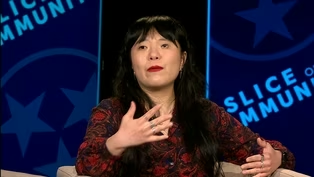
The Reality of Being an Asian Comedian in Stand-Up
Video has Closed Captions
Clip: S4 Ep7 | 1m 39s | The reality of being an Asian comedian in stand-up. (1m 39s)
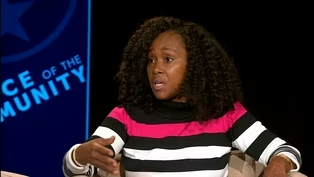
Being a Woman in a Male-Dominated Comedy Scene
Video has Closed Captions
Clip: S4 Ep7 | 1m 46s | Being a woman in a male-dominated comedy scene. (1m 46s)
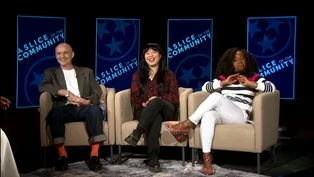
How Stand-Up Comedians Shut Down Hecklers
Video has Closed Captions
Clip: S4 Ep7 | 48s | How stand-up comedians shut down hecklers. (48s)
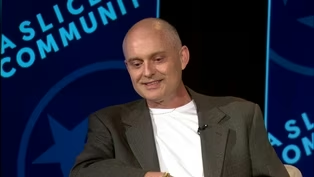
What If Your News Was R-Rated?
Video has Closed Captions
Clip: S4 Ep7 | 1m 5s | What If your news was R-rated? (1m 5s)
Providing Support for PBS.org
Learn Moreabout PBS online sponsorship New Episode
- News and Public Affairs

Top journalists deliver compelling original analysis of the hour's headlines.

- News and Public Affairs

Today's top journalists discuss Washington's current political events and public affairs.

 New Episode

 New Episode


 New Episode


Support for PBS provided by:
A Slice of the Community is a local public television program presented by WNPT