Virginia Home Grown
Baker's Garden
Clip: Season 26 Episode 1 | 7m 57sVideo has Closed Captions
Learn about edible flowers and garnishes used to decorate cakes
Peggy Singlemann visits Chris Martin and their garden in Charlottesville to learn flowers and other garnishes used to embellish the sweet treats they create for Florosa Bakery. Featured on VHG episode 2601, March 2026.
Problems playing video? | Closed Captioning Feedback
Problems playing video? | Closed Captioning Feedback
Virginia Home Grown is a local public television program presented by VPM
Virginia Home Grown
Baker's Garden
Clip: Season 26 Episode 1 | 7m 57sVideo has Closed Captions
Peggy Singlemann visits Chris Martin and their garden in Charlottesville to learn flowers and other garnishes used to embellish the sweet treats they create for Florosa Bakery. Featured on VHG episode 2601, March 2026.
Problems playing video? | Closed Captioning Feedback
How to Watch Virginia Home Grown
Virginia Home Grown is available to stream on pbs.org and the free PBS App, available on iPhone, Apple TV, Android TV, Android smartphones, Amazon Fire TV, Amazon Fire Tablet, Roku, Samsung Smart TV, and Vizio.
Providing Support for PBS.org
Learn Moreabout PBS online sponsorship>>I worked in fine dining for a number of years and got to work with really amazing edible flowers and micro greens.
And now being in Central Virginia, they're a lot harder to source.
I realized I had to grow them myself.
>>Oh, I'm so happy for you, because this is a fun hobby to add to baking.
>>Oh, of course.
>>You know, here it is early spring.
It's a unique time of year because we can truly see things just popping up and, I don't know, it's kind of a rebirth time.
One of them, though, is our grape hyacinth, our muscari right here.
So I didn't realize it was one that you could use.
>>Absolutely.
It provides that puffy little cotton ball look on a cake.
>>Interesting.
Kind of like a floral design on a cake.
I love it.
>>That's really a lot of what these cakes are.
It's floral design in one big sponge.
>>Fantastic.
And that sponge is made with fresh eggs from the chickens?
>>Absolutely, absolutely.
>>Which adds an even better flavor.
>>Yes.
>>But I love the site that you have here because I love the mixture of full shade, part shade, and full sun.
And as a gardener, to me, it checks every box.
>>Oh, thank you so much.
I feel like I had to lean in to the things that I couldn't change.
So working with the shade from the trees and making sure that it has, like, some partial shade plants that are able to benefit from that, and then making sure to use the tin and a sort of hugelkultur style of swales to be able to catch the water and reduce erosion.
>>This is genius.
And if people could really see the way the water would flow out of heavy rain, each layer catches, or each level catches that water.
>>It does, it does.
>>And then that hugelkultur, which is all those sticks and all the branches and I'll say leaves as well as the logs under there absorbs it and holds it so you actually have less water needs here.
>>Absolutely.
And I do have the water catchment barrel, the tote up at the top.
Some soaker hoses will hook up and hopefully keep the bottom half of this hydrated.
But up at the top, I want it to be a little bit drier because I'm trying to establish some strawberries and we know they benefit from less water.
>>Absolutely.
But I also see that you're using as a cover crop bachelor buttons, and I love that (chuckles).
>>Oh, I mean, they're the best and I can use them infinitely and they dry really well.
So I'm able to have some sort of floral confetti sprinkle in the winter as well.
>>Fantastic.
Love those bachelor buttons.
So many good uses, and such a pretty blue too.
>>Ah, I love.
>>Brightens things up.
You've just got so much good going on here.
I can see you've put a lot of thought into it.
>>Thank you.
I like to dig.
It's really therapeutic.
>>It is.
It's extremely.
And then over here with the herb garden.
How do you get these plants to grow in this heavy clay though?
>>Ultimately, a lot of this is backfilled with gravel from the previous owners.
And so the Mediterranean style herbs really benefit from that level of drainage.
>>That's excellent.
What do you have growing in here?
>>I've got a variety.
I've got a Tokyo bekana that's coming up and starting to bloom, which would be a really great garnish for a cake.
Little bits of dead-nettle are really important to keep those available for the bees.
It's a hard time of year.
They're just waking up.
>>Sure, it's that early spring that's so hard, and the late fall as well.
>>Absolutely.
>>So it's important to have those flowers still available.
>>Plumes of parsley and tarragon.
The sorrel does really well this time of year, the red vein and more of the green traditional.
And then lemon balm as well.
I use a ton of lemon balm.
>>Yes, and it's so easy to grow and it's so prolific.
It seeds everywhere.
>>It really is.
It never gets there.
It never gets to seed because I use it a lot.
>>I'll take that under advice.
I'm pulling it everywhere.
(Peggy and Chris laugh) But I can't help but wonder about the daffodils.
>>Oh, yeah.
I mean, they are beautiful, though they are toxic.
So those are not good for cakes.
I like to cultivate and put in flowers that are edible and non-toxic.
Though, the daffodils are here, and I know definitely not to put them on cakes.
>>Right.
They predate the garden?
>>Mm-hm.
>>Yes.
Most daffodils do.
Well, I understand that you have a cake inside for us to decorate.
>>I do.
>>And I'm excited to do that.
>>Oh my gosh.
>>Can we go and take it out?
>>Let's do it.
Of course, let's see the bakery.
(mixer whirring) >>Chris, in putting together a cake and starting to decorate it, really, what's on your mind, your thoughts while you're starting to prepare for this?
>>Well, when I'm harvesting flowers and herbs in the garden, I'm thinking in odds and evens.
I really like to work in odds.
You get a lot more visual interest.
We picked five of the grape hyacinth outside.
I'm creating a little crown.
So I'm trying to give accents and also not in perfect symmetry as well.
So being able to place kind of here in a triangle, right?
These are longer and this is shorter.
So that way you have this, like, interesting connection of color components.
And it's about spreading out the color as well.
So you get the pops of the red vein and the red sorrel, the yellow from the Tokyo bekana, which we also, if you can count, hit five.
So we had three big of the visual interests and then the two of the smaller accents.
So I always want some bigger components and then some smaller accent pieces.
>>Mm-hm.
What type of frosting did you use for this cake?
>>Well, this is a lemongrass whipped ganache made with last year's lemongrass from the garden.
>>Oh, that's so cool.
>>So I save the bottom stalks for tasks that make more sense for them.
But the leaves, which is usually considered waste, I wrap them up like this and use them to infuse into heavy cream, and fat is a great carrier for flavor.
But you can also throw it into stock, sauces, stuff like that, to bring that lemongrass flavor without having to get rid of all this lovely, lovely leaf.
>>Yes.
Oh, that's excellent.
I love that idea.
After you've decorated a cake, what's the next step?
How does it preserve?
>>So the next step is getting it into an airtight container, whether that's a cake box or potentially an upside down Tupperware tends to work as well.
And putting it into the fridge.
You really don't want the air circulation from the fan in the fridge.
That will dry your flowers out.
>>Yeah, desiccate them.
>>As soon as possible, like, from putting flowers on the cake to serving.
>>When you're putting together your garden plans, are you choosing flowers with the consideration of their longevity after you've harvested them or are you choosing for texture or color?
What are your factors thinking of the end result?
>>I choose for texture and color and I choose for season.
So I know what comes up earlier in the spring and will be able to fill that gap.
Like, when you're really waiting for rhubarb to come and you're like, "Please," I'm really waiting for certain flowers to come.
So the muscari coming up, I'm like, "Thank goodness."
And I do let cabbages bolt because their flowers can be used for purposes like this.
And then I make sure that I have coverage through the summer and also through the fall.
>>Pastries you can do?
Because I think of confectionery sugar, I'm not thinking of frosting, or I'm thinking of a very light glaze.
So how do you handle that with the flowers on a pastry?
>>So on a pastry, it's less of the whole flowers and more of the single petals, typically.
And when something is going to sit in a pastry case for a longer amount of time, I know it's something that will not hold up to time and will wilt.
But if it's an event that I'm working at and I'm plating for people, being able to put on a fresh component, the red vein sorrel is a classic micro green.
And then the lemon balm as well.
But petals of pansies, those come off really easily, or borage, as well, has that cucumber flavor.
So you can just put just one on top of, like, a little fruit tart- >>It's all you really need sometimes.
>>Or something like that.
>>Yep, just a little touch of color to brighten it up.
Make it a little more personal too.
>>Exactly.
>>What would you advise a home gardener start with if they wanted to venture down this road and start decorating their cakes?
>>It's easiest to start with the herbs, and they also serve a double function where you can use them both as, like, the herb and the leaf or you can let it go to bloom and you can use those blooms.
>>Well, this has been fun.
It's just been fun to, I'll say, see a garden from a baker's perspective rather than just a gardener's perspective and to start thinking of our flowers, how to use them, and also which are edible and certainly which are not edible.
>>Absolutely.
>>Thank you for sharing your expertise.
>>Thank you.
Thanks for being here.
 New
NewVideo has Closed Captions
Clip: S26 Ep1 | 7m 59s | Learn how cut flowers are grown locally using sustainable methods (7m 59s)
 New
NewVideo has Closed Captions
Clip: S26 Ep1 | 3m 1s | Divide and transplant perennial flowers to fill your garden with color (3m 1s)
 New
NewVideo has Closed Captions
Clip: S26 Ep1 | 6m 4s | Learn tips to keep your garden tools sharp and clean (6m 4s)
 New
NewVideo has Closed Captions
Clip: S26 Ep1 | 3m 33s | Increase blossoms and get a bigger harvest by properly pruning fruit trees (3m 33s)
 New
NewVideo has Closed Captions
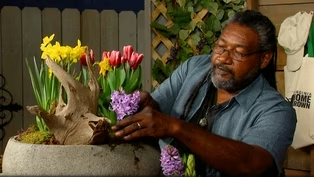
Clip: S26 Ep1 | 6m 54s | Learn how to make an easy spring planter using potted perennials (6m 54s)
Providing Support for PBS.org
Learn Moreabout PBS online sponsorship

- Home and How To

Hit the road in a classic car for a tour through Great Britain with two antiques experts.











Support for PBS provided by:
Virginia Home Grown is a local public television program presented by VPM